Cynoglossum officinale
Cynoglossum officinale
Cynoglossum officinale Common Hound's Tongue / Native Houndstongue
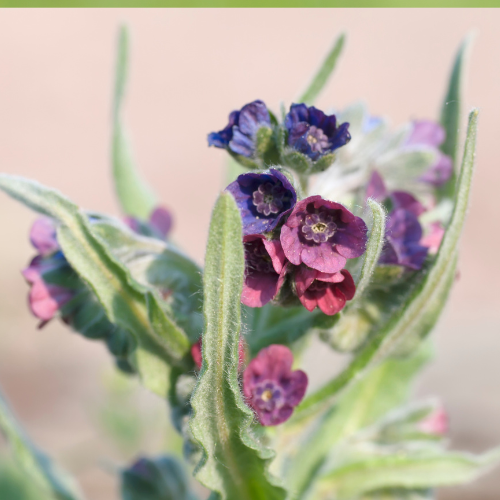
A native British wildflower with rich, almost-mahogany maroon-purple flowers held in tall branching sprays above velvety grey-green rosette foliage — Cynoglossum officinale is the dark, structural, slightly mysterious cottage perennial that brings genuine biodiversity value and uncommon colour to any wild-style border.
While the brighter blue and pink Chinese Forget-Me-Not relatives steal most of the limelight in the seed catalogues, the native British Hound's Tongue is the moody, characterful, ecologically rich member of the family. The flowers are unusual for the genus — deep maroon-purple to dark dusty-red, the colour of dried wine or old velvet, held in tall airy sprays from May through July. Below the flowers, a characteristically velvety grey-green rosette of softly hairy leaves earns the plant its "hound's tongue" name (the texture resembles a dog's tongue, hence the Greek kynos glossa). Hardy biennial (H7) following a two-year cycle: forming the rosette in year one, sending up the flower spires in year two. RHS Plants for Pollinators recognised — particularly valuable for long-tongued bumblebees and other native early-summer pollinators that struggle with shorter-tubed flowers.
A note on growing
Sow direct outdoors from April to July for flowers the following year — Hound's Tongue is biennial and needs the first year to establish the rosette. Cover seeds lightly with about 5mm of compost. Germination takes 14–21 days. Thin to 30cm spacing. Full sun or light dappled shade, in well-drained soil — officinale genuinely prefers dry, sandy or chalky conditions and resents waterlogged ground. Drought-tolerant once established. Nature's Velcro: After flowering, the plant develops distinctive four-part nutlets covered in tiny hooked prickles (burrs) — designed by nature to hitch a ride on passing animals for seed dispersal. These "sticky" seeds are a fascinating example of botanical dispersal but worth knowing about if you have long-haired pets or share borders with walking paths — burrs will absolutely attach to clothing and fur. Plant towards the back of borders where this is less of a problem.
⚠️ A note on safety: Like all Boraginaceae family plants, Cynoglossum officinale contains pyrrolizidine alkaloids and should not be consumed. Wear gloves when handling and keep away from grazing animals; historically used in herbal medicine but no longer considered safe for ingestion.
Where it shines
In wild-style cottage borders and naturalistic plantings where the muted maroon flowers add proper depth and the velvety rosette foliage provides textural interest year-round. In wildlife gardens, where the high nectar value for native bumblebees and the structural seed-head architecture both earn it a place. In dry, sandy or chalky borders where it thrives in conditions that defeat most cottage perennials. In moody, structural plantings where the dark colour reads as sophisticated rather than gloomy. As a piece of British botanical heritage — Hound's Tongue has been growing wild in Britain for centuries.
Plant alongside
For a moody, structural wild garden combination, pair Cynoglossum officinale with the deep maroon-chocolate Cornflower 'Black Ball' and the dusty rose of Cynoglossum 'Mystery Rose' for a tonal "old velvet" palette. For an authentic native wildflower meadow, combine with Cornflower 'Blue Ball' (native), Corncockle, and Wild Chicory. The dark flowers also work beautifully against silver-grey foliage — particularly Lychnis coronaria.
Product features
Product features
Materials and care
Materials and care
Frequently Asked Questions
Frequently Asked Questions
Share