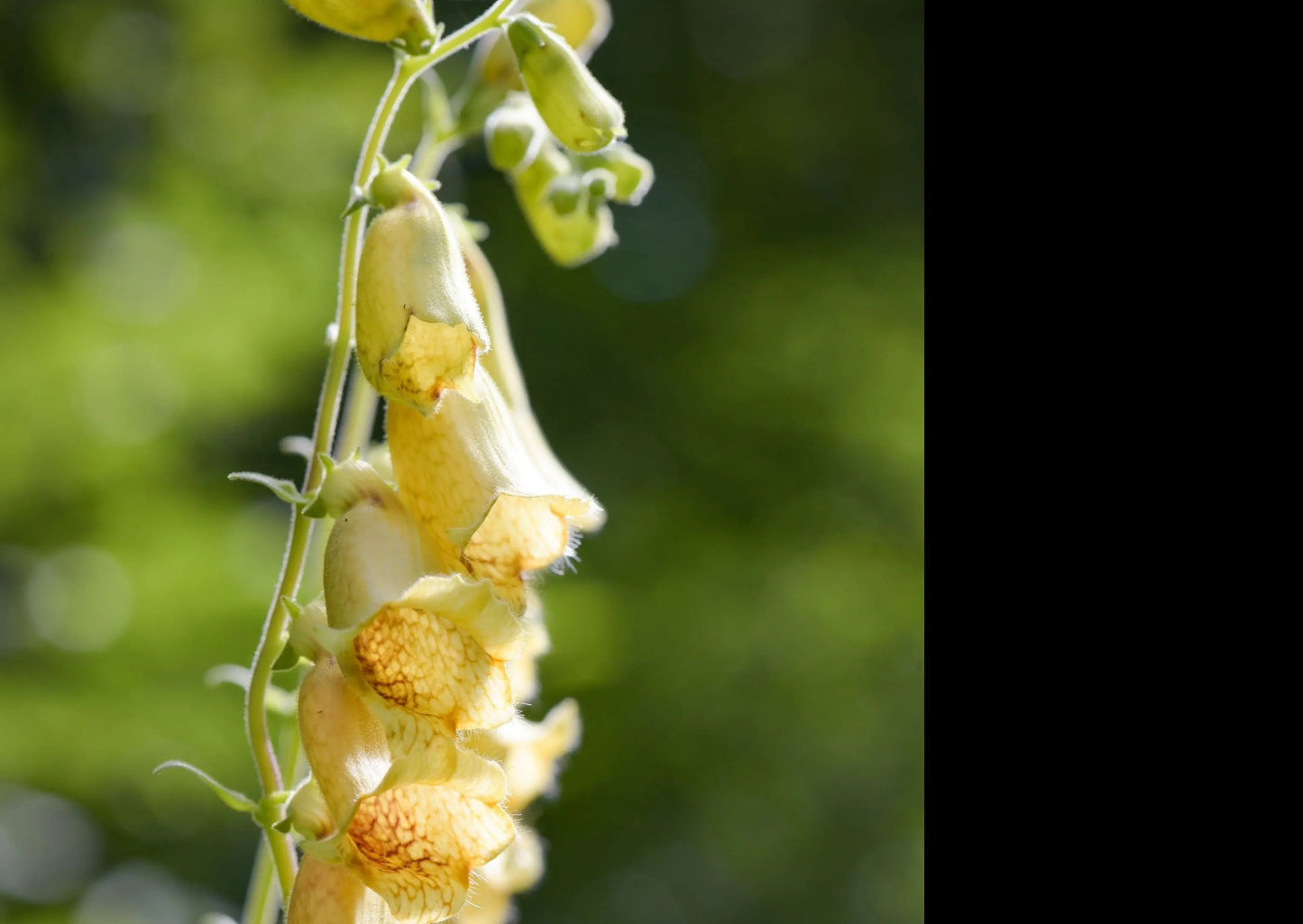
Foxglove Primrose Yellow
Foxglove Primrose Yellow
Digitalis purpurea 'Primrose Yellow' Foxglove 'Primrose Yellow' / Lemon Foxglove
Tall majestic spikes densely packed with soft creamy-lemon bells, often delicately speckled inside with tiny chocolate freckles — 'Primrose Yellow' is the sophisticated alternative to traditional purple Foxgloves, bringing pale luminous colour to dark corners and a particular long-tongued bumblebee favouritism that makes it one of the most quietly useful Foxgloves in any wildlife garden.
While the common purple Foxglove is a classic, 'Primrose Yellow' brings a whole new level of sophistication to the cottage border. The tall majestic spikes (1.2–1.5m) are densely packed with soft creamy-lemon bells, often speckled inside with tiny chocolate freckles. This pale colour is incredibly valuable in garden design because it "lights up" dark corners — plant it under trees, along a north-facing wall, or at the back of a shaded border, and the pale yellow flowers will glow in dim light. A particular favourite of the long-tongued Carder bee (Bombus pascuorum), which has specifically co-evolved with Foxglove flower structures. Hardy biennial (H7). The selection that pairs unusually well with purple and white companions for sophisticated cottage planting schemes.
A note on growing
Foxglove seeds are exceptionally fine and need light to germinate. Sow indoors April–May or direct outdoors May–July. Surface-sow on moist compost — do not cover with soil. Maintain 15–20°C; germination 14–21 days. Plant out in autumn into shaded or semi-shaded position with moist well-drained soil. Year 1: rosette. Year 2: spires.
⚠️ Important toxicity warning: All parts of Foxglove are highly toxic if ingested by humans or pets. Wear gloves when handling. Keep seed packets away from children.
Where it shines
As a "light up dark corners" plant — pale yellow Foxgloves are particularly valuable in shaded positions where they appear to glow in low light. In sophisticated cottage planting schemes where the cream-lemon palette reads as designer rather than wild. As a complementary colour planted alongside purples (the yellow-purple complementary pairing is one of the most powerful colour partnerships in horticulture). As a cut flower for tall arrangements (with toxicity caution).
Plant alongside
For the classical complementary colour combination, pair 'Primrose Yellow' with Purple Sweet Rocket (Hesperis matronalis) — both flower simultaneously in May–July, creating the timeless yellow-and-purple cottage garden partnership that few other combinations can match. With Honesty (Lunaria annua) for the biennial bridge partnership. With Foxglove 'Alba White' for an all-pale cottage scheme that genuinely glows at dusk.
Product features
Product features
Materials and care
Materials and care
Frequently Asked Questions
Frequently Asked Questions
Share