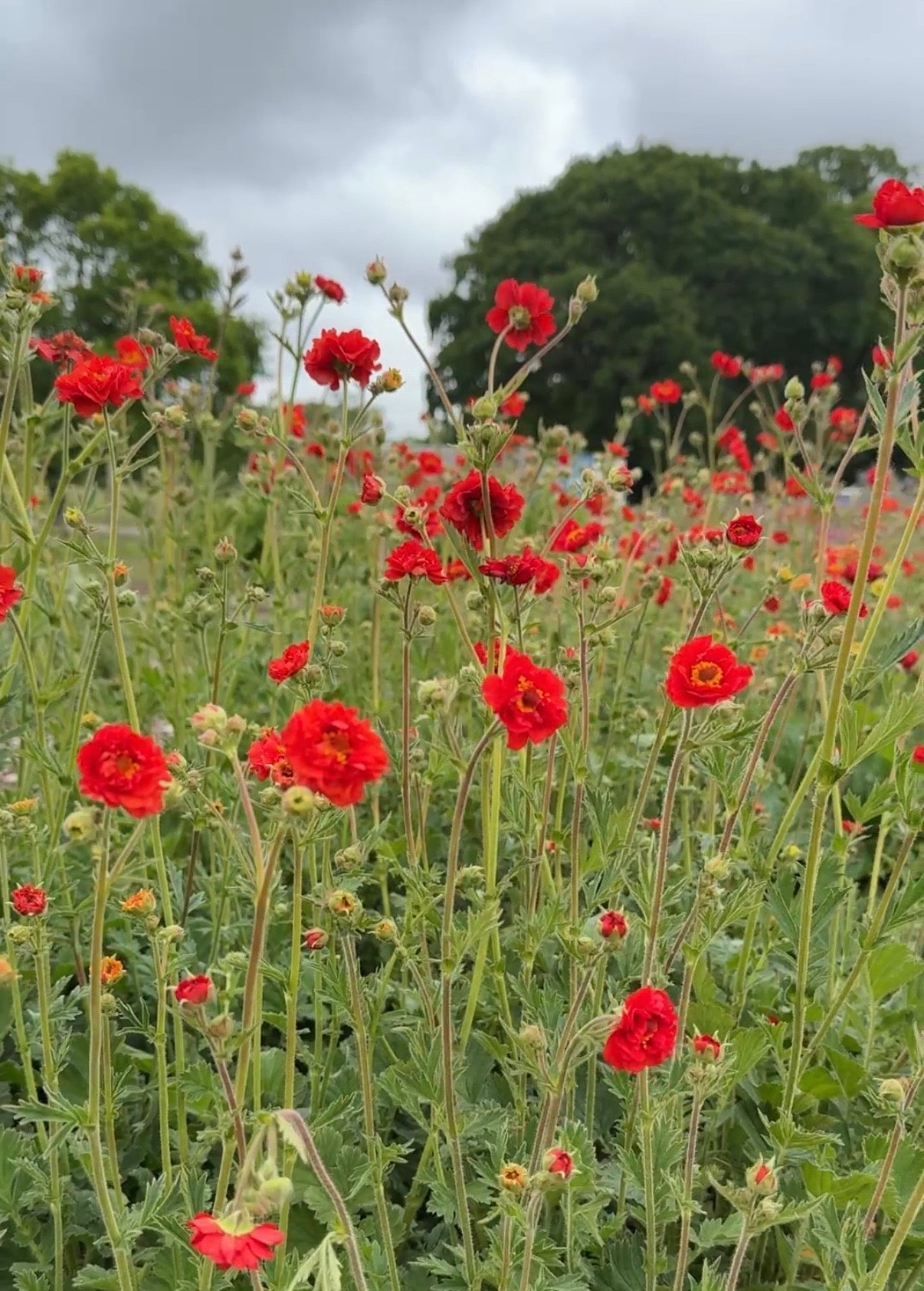
Geum Mrs Bradshaw
Geum Mrs Bradshaw
Geum chiloense 'Mrs J. Bradshaw' Red Avens 'Mrs Bradshaw'
Warm scarlet-red semi-double ruffled flowers with prominent golden stamen centres, held on slender wiry stems that make the blooms appear to float in mid-air — Geum 'Mrs Bradshaw' is the RHS Award of Garden Merit cottage garden perennial that has been grown, divided and shared between English gardens for well over a century, and remains one of the most reliable and characterful red perennials available from seed.
Not a harsh fire-engine red, but the slightly orange-toned, strawberry-touched red of a good cottage garden — the kind of red that feels entirely natural alongside pinks, purples, blues, and the soft faded tones of an established mixed border. Each bloom centres on a cluster of prominent golden stamens that provide vivid contrast against the red petals, making the flower look particularly fresh and clean even in the height of a hot summer. The stems are wiry and slender (45–60cm), holding the flowers well above an attractive mound of soft scalloped semi-evergreen foliage. Hardy perennial (H7), surviving below -20°C. Holds the RHS Award of Garden Merit. Exceptionally clay-tolerant — Mrs Bradshaw is one of the few ornamental perennials that actually performs well in heavy clay soils. Flowering season May to September with consistent deadheading.
A note on growing
Like its yellow sister Lady Stratheden, Mrs Bradshaw needs light and consistent warmth (18–20°C) to germinate. Surface-sow indoors February–April. Cover with only the finest dusting of vermiculite. Germination is variable (typically 14–28 days, occasionally longer) — late germinators within a single sowing are common and often produce excellent plants. Resist the impulse to discard ungerminated trays.
Plant out in sun or partial shade in clay-tolerant, moist but not waterlogged soil. Mrs Bradshaw genuinely thrives in heavy clay soils where many decorative perennials fail. Deadhead every spent flower stem back to the basal foliage consistently throughout the season — this is the difference between a 6-week flowering season and 4 months of continuous scarlet. Cut entire stems back to base; do not leave stubs. Divide clumps every 2–3 years in autumn for renewed vigour. Bonus: don't deadhead the final flush of late stems — the fuzzy burr-like seed heads turn a deep reddish-brown and look stunning in textural dried arrangements.
Where it shines
In cottage borders for warm, characterful, long-season scarlet that bridges spring and summer — Mrs Bradshaw starts blooming as the tulips finish and continues well into September. As a "floating colour" — the slender wiry stems make the flowers appear to dance in mid-air, adding lightness amongst more rigid border perennials. In clay-tolerant plantings where few other decorative perennials thrive. With the late-season seed heads providing structural autumn interest.
Plant alongside
The quintessential cottage spring contrast: pair Mrs Bradshaw with Forget-me-not 'Blue' — Geum begins flowering as the Forget-me-nots reach their late-spring peak, the intense scarlet rising from a sea of soft baby-blue creating one of the most quintessentially English cottage garden looks. For high-contrast florist quality, combine with Bupleurum 'Griffithii' — the zesty lime-green flowers act as the perfect foil, making the scarlet absolutely pop. For matching Geum tradition, pair with Geum 'Lady Stratheden' (yellow sister) for the classic warm complementary pairing that English cottage gardens have grown together for generations.
Product features
Product features
Materials and care
Materials and care
Frequently Asked Questions
Frequently Asked Questions
Share