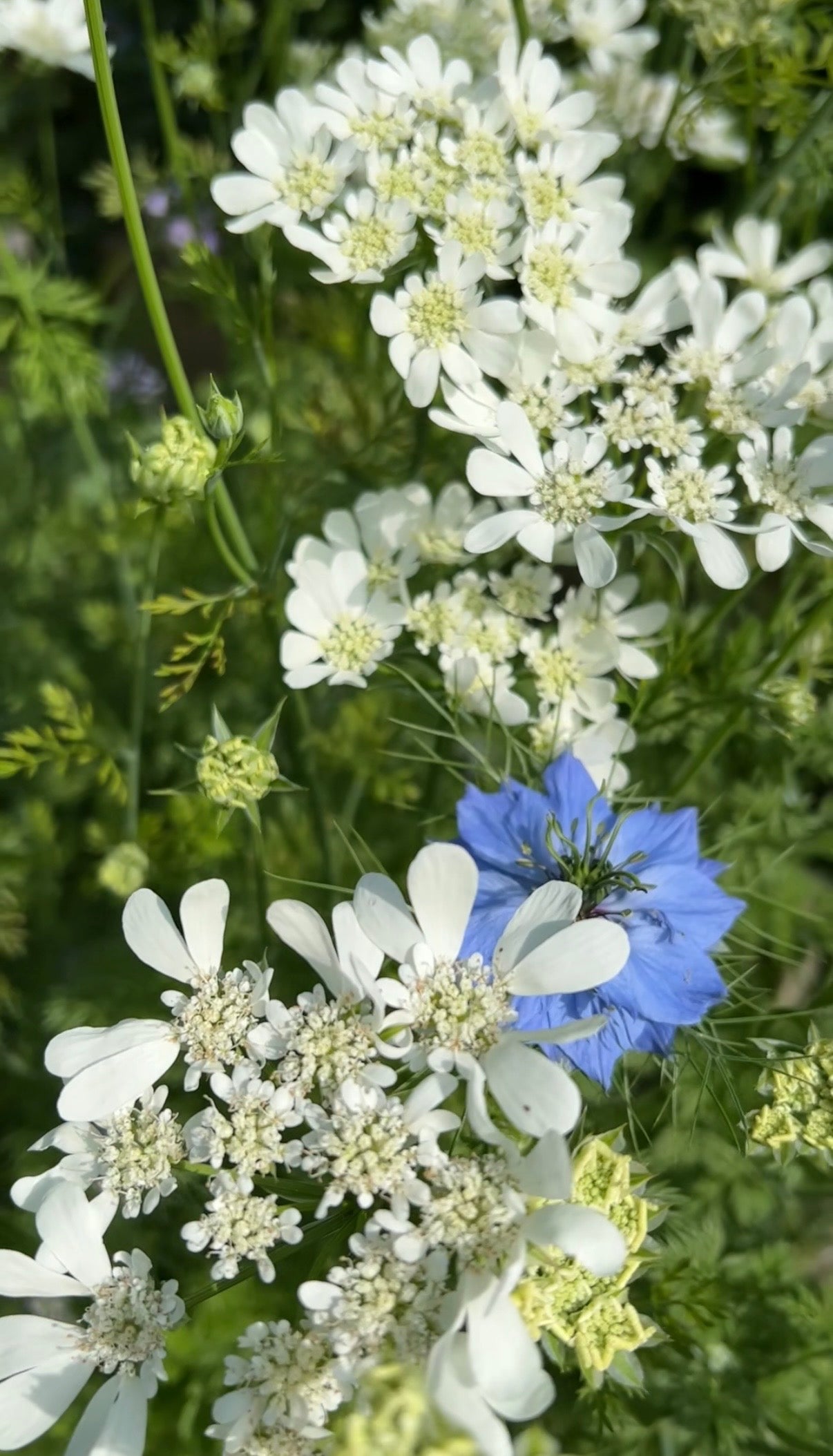
Orlaya Grandiflora
Orlaya Grandiflora
Orlaya grandiflora White Lace Flower / Minoan Lace
Large lacy white flat-topped umbels with distinctive outer petals that are dramatically elongated, creating a refined lace-like appearance reminiscent of Queen Anne's Lace but with greater elegance and substance — Orlaya grandiflora is the cottage garden's most sophisticated white umbel cut flower, beloved by florists and exceptional in romantic wedding bouquets.
If Ammi majus is the workhorse white umbel of the cottage cutting garden, Orlaya is the designer alternative — a refined and elegant cousin with significantly more architectural quality per flower head. Each umbel is composed of dozens of tiny pure-white florets surrounded by a striking ring of larger elongated outer petals that create the distinctive "lace" pattern. The effect is cleaner, more sculptural, and more obviously deliberate than the looser Ammi structure — particularly outstanding for high-end florist work where the umbel form needs proper visual substance. Native to the eastern Mediterranean (the "Minoan Lace" common name refers to its abundance in Crete and surrounding Greek islands). Hardy annual reaching 60–75cm with finely-divided ferny foliage that complements the lace flower heads beautifully. Flowers June through August. RHS Plants for Pollinators recognised — the open accessible umbels are particularly valued by hoverflies, short-tongued bees, and a range of beneficial insects.
A note on growing
Orlaya has a sensitive taproot and resents transplanting — direct sowing is essential. Sow direct outdoors in September for autumn-sown plants that produce taller, earlier-flowering specimens the following year, or March–April for summer flowering. Surface-sow or barely cover (3mm); Orlaya seeds need light to germinate. Germination 14–28 days — sometimes erratic, so don't give up early.
Full sun in well-drained soil. Like its Apiaceae cousin Ammi majus, Orlaya prefers lean soil over rich — don't fertilise. Average to poor well-drained garden soil produces the strongest most floriferous plants. In windy gardens, plant in groups of 5–7 so the slender stems can support each other.
⚠️ Skin irritation note: Orlaya is in the same family (Apiaceae) as Wild Carrot and Ammi — the sap can cause mild skin irritation in sunlight (phototoxicity) in sensitive individuals. Wear gloves when cutting on sunny days.
Where it shines
In the cutting garden as the premium white umbel — Orlaya is the variety high-end wedding florists specifically request, and growing it yourself transforms cottage cutting bouquets into something genuinely designer-quality. In modern romantic cottage borders where the architectural lace quality reads as sophisticated rather than wild. As an essential bridal flower — the pure white and the lace form make it irresistible for wedding work. In wildlife gardens for the high pollinator value. The seed heads also dry beautifully for autumn arrangements.
Plant alongside
The classic on-trend cutting combination: pair Orlaya with Daucus carota 'Dara' (Chocolate Lace Flower) — both share the Apiaceae lace umbel form, but the smoky burgundy 'Dara' provides dramatic colour contrast against the pure white Orlaya. With Nigella 'Persian Jewels Mixed' for textured cottage cutting (Nigella jewel tones against Orlaya lace). With Ammi majus for layered white umbel structure in the same border.
Product features
Product features
Materials and care
Materials and care
Frequently Asked Questions
Frequently Asked Questions
Share